

 Cart is empty
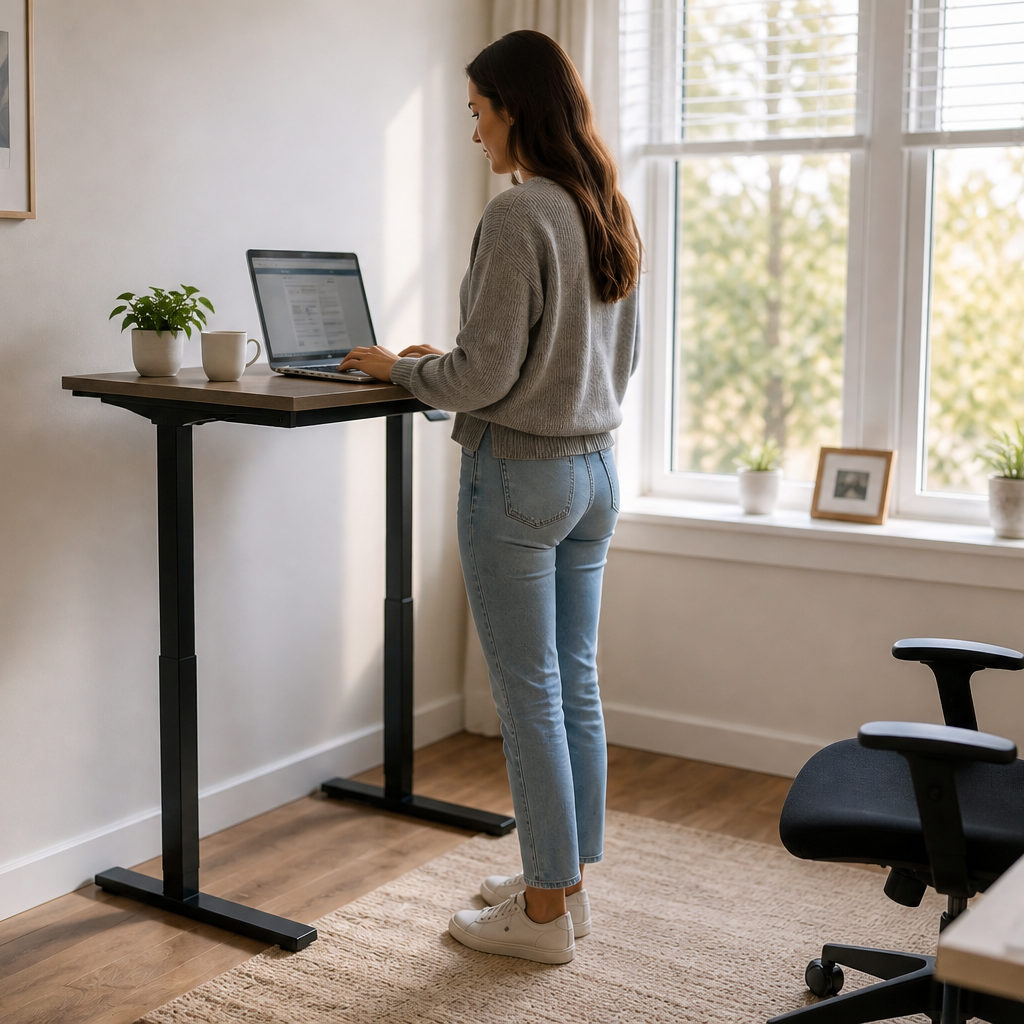
Creating a comfortable and productive workspace can be challenging when you have limited room. Whether you work from a small home office, a studio apartment, or a dorm room, finding a desk that fits your space without compromising functionality is essential.
Small standing desks offer a practical solution for people who want a compact workstation and the flexibility to work while standing. Available in various sizes, designs, and adjustment styles, these desks make it easier to create a functional workspace in almost any environment.
In this guide, we’ll explain what small standing desks are, explore their key features and benefits, compare different types, and share practical tips for choosing the right desk for your needs.
Key Takeaways
- Space-saving design: Small standing desks fit comfortably into compact home offices, bedrooms, apartments, and dorm rooms.
- Flexible working positions: Adjustable models allow you to alternate between sitting and standing.
- Ergonomic features: The right desk height and workstation setup can support comfortable posture.
- Multiple styles: Choose from electric desks, manual adjustable desks, fixed-height desks, and standing desk converters.
- Customizable options: Materials, finishes, storage solutions, and cable-management features help you create a workspace that suits your needs.
- Better workspace organization: A well-planned compact desk can help keep essential work equipment accessible without overcrowding your room.
What Is a Small Standing Desk?
A small standing desk is a compact workstation designed to provide a comfortable work surface while taking up relatively little floor space. Depending on the model, it may feature a fixed standing height or an adjustable mechanism that allows you to raise and lower the desktop.
Unlike traditional large desks, compact standing desks are designed to make efficient use of limited space. They can accommodate essential equipment such as a laptop, monitor, keyboard, mouse, and a few everyday accessories.
Small standing desks are particularly useful for:
- People working from home in limited spaces.
- Students living in dorm rooms or shared accommodation.
- Professionals who need a secondary workstation.
- Laptop users who prefer a minimalist desk setup.
- Anyone looking to create a more flexible home office.
When choosing a compact standing desk, consider the dimensions of your room, the equipment you use, and whether you need to alternate between sitting and standing.
Benefits of Small Standing Desks
A compact standing desk can improve the functionality of your workspace while helping you develop more flexible working habits.
1. Make the Most of Limited Space
One of the biggest advantages of a small standing desk is its space-efficient design. It can fit into corners, narrow rooms, and other areas where a full-size workstation may be impractical.
A smaller desktop also encourages you to prioritize essential equipment and keep your workspace organized.
For the best results, measure your available floor space before purchasing a desk. Remember to leave enough room for your chair, leg movement, cables, and access to nearby storage.
2. Alternate Between Sitting and Standing
Height-adjustable standing desks allow you to change working positions throughout the day. Alternating between sitting, standing, and walking breaks can help reduce prolonged sedentary time.
Standing alone is not a replacement for physical activity, but an adjustable desk can make it easier to incorporate movement into your routine.
If you work at a computer for several hours daily, consider choosing a model that adjusts to both your seated and standing working heights.
3. Support a Comfortable Workstation
A properly configured small standing desk can help you maintain a comfortable working posture.
Your elbows should remain close to your body, with your forearms approximately parallel to the floor while typing. Position your monitor at a comfortable viewing height and distance to reduce unnecessary neck movement.
Keep frequently used items within easy reach so you do not need to stretch repeatedly across the desk.
Remember that comfort depends on the entire workstation, including your monitor, keyboard, footwear, and working habits—not just the desk itself.
4. Create a More Organized Workspace
Many compact standing desks include practical features such as cable-management systems, drawers, shelves, and accessory hooks.
These features help keep your desktop clear and make better use of limited space.
If you use multiple devices, check whether the desk has enough room for your monitor, laptop, keyboard, mouse, and any other essential equipment before making a purchase.
Types of Small Standing Desks
Small standing desks are available in several styles. Understanding the differences can help you choose a model that suits your workspace, budget, and daily routine.
1. Electric Adjustable Standing Desks
Electric standing desks use a motorized mechanism to raise and lower the desktop at the touch of a button.
They are convenient for people who frequently switch between sitting and standing. Some models also include programmable height settings, allowing you to save preferred positions.
Best for: Home office workers who want convenient height adjustments and a flexible workstation.
What to consider: Price, motor noise, adjustment range, weight capacity, and the space required for the desk frame.
2. Manual or Hand-Crank Standing Desks
Manual standing desks use a hand crank or another mechanical adjustment system to change the desktop height.
They can offer height flexibility without requiring an electric motor, making them worth considering if you prefer a simpler design.
Best for: Budget-conscious users who want an adjustable desk and do not mind making height changes manually.
What to consider: Ease of adjustment, frame stability, and how frequently you expect to change positions.
3. Fixed-Height Standing Desks
Fixed-height standing desks have a stationary work surface designed for use while standing.
Their simpler construction may make them suitable for users who primarily work on their feet and do not need seated-height adjustments.
Best for: Dedicated standing workstations, occasional-use desks, or minimalist office setups.
What to consider: Ensure the desk height suits your body and working posture before purchasing.
4. Standing Desk Converters
A standing desk converter sits on top of an existing desk and provides a raised work surface for standing.
Some converters feature adjustable platforms for your monitor and keyboard, while others use a simpler lifting mechanism.
They can be an effective solution if you want to keep your current desk rather than replace it.
Best for: Small home offices, renters, students, and people who want to try a sit-stand setup without buying a complete standing desk.
Before choosing a converter, check its dimensions, weight capacity, adjustment range, and the amount of usable space remaining on your original desk.
Important Features to Look for in a Small Standing Desk
Not every compact desk offers the same functionality. Consider the following features when comparing options.
Desktop Size and Workspace
Measure the available area in your room and compare it with the desk’s width and depth.
Make sure the surface can accommodate your essential equipment without forcing you into an uncomfortable position. A laptop-only workstation may require less space than a setup with a large monitor, keyboard, and accessories.
Height Adjustability
If you plan to alternate between sitting and standing, check the desk’s minimum and maximum heights.
The adjustment range should suit your body height and allow you to work comfortably in both positions.
Weight Capacity and Stability
Check the manufacturer’s stated weight capacity and ensure the desk can safely support your equipment.
A stable frame is especially important when typing, using a monitor, or adjusting the desk height.
Storage and Cable Management
Drawers, shelves, cable trays, and integrated cable openings can make a compact workstation easier to organize.
However, avoid sacrificing too much usable desktop space for storage features you may not need.
Power Outlets and USB Ports
Some standing desks include integrated power outlets or USB charging ports. These can be convenient for charging compatible devices and reducing desktop clutter.
Check the product specifications to confirm which connections are included rather than assuming they are standard features.
Materials and Finishes
Small standing desks are available in a variety of materials and finishes, including laminate, engineered wood, solid wood, and metal frames.
Choose a finish that complements your room and suits your maintenance preferences. Also consider the durability of the desktop, the quality of the frame, and the manufacturer’s care instructions.
How to Choose the Right Small Standing Desk
The best compact standing desk is one that fits your space, accommodates your equipment, and supports your preferred working style.
Follow these steps before making your decision.
Step 1: Measure your available space. Record the maximum desk width and depth your room can accommodate. Allow additional space for movement and nearby furniture.
Step 2: List your essential equipment. Identify whether you need space for a laptop, one or more monitors, a keyboard, a mouse, and other accessories.
Step 3: Decide whether you need height adjustment. Choose an adjustable model if you want to alternate between sitting and standing. A fixed-height model may be sufficient for a dedicated standing workstation.
Step 4: Set a realistic budget. Compare the total cost with the features you actually need, including adjustment mechanisms, storage, and cable management.
Step 5: Check the specifications. Review the desk dimensions, height range, weight capacity, stability, assembly requirements, and warranty information.
Step 6: Plan your ergonomics. Ensure the desk can be set up with a comfortable monitor position and suitable keyboard height.
Tips for Setting Up a Small Standing Desk
A well-organized workstation can make a compact desk more comfortable and practical.
- Keep essentials nearby: Place your keyboard, mouse, and frequently used accessories within easy reach.
- Manage cables: Use cable clips or trays to prevent wires from becoming tangled.
- Position your monitor comfortably: Keep the screen at a suitable height and distance for your needs.
- Use vertical storage: Consider shelves or wall-mounted organizers if you need extra storage without taking up more floor space.
- Alternate your working positions: If you use an adjustable desk, switch between sitting and standing and take regular movement breaks.
- Avoid prolonged standing: Standing all day can cause discomfort. Aim for a balanced routine that includes sitting, standing, and walking.
Frequently Asked Questions
What size is considered a small standing desk?
There is no universal size definition. A small standing desk is generally designed to occupy less space than a standard full-size workstation. Compare the desk’s width and depth with your available room and equipment requirements.
Are small standing desks suitable for home offices?
Yes. Small standing desks can be useful in home offices, apartments, bedrooms, and shared spaces where floor area is limited. Choose a desk that accommodates your equipment and provides sufficient room to work comfortably.
Are electric standing desks better than manual models?
Electric desks offer convenient, button-operated adjustments, while manual models can provide height flexibility with a simpler mechanism. The better option depends on your budget, adjustment preferences, and how often you change working positions.
Can I use a standing desk converter instead of buying a new desk?
Yes. A standing desk converter can transform an existing desk into a sit-stand workstation. Check that it fits your current desk and provides sufficient space and height adjustment for your equipment.
Do small standing desks help improve posture?
A properly adjusted desk can support a comfortable working posture. However, posture also depends on monitor placement, keyboard position, chair setup, and how frequently you move throughout the day.
What should I look for in a compact standing desk?
Prioritize suitable dimensions, an appropriate height range, stability, weight capacity, and enough desktop space for your equipment. Additional features such as cable management and storage can improve convenience.
Final Thoughts
Small standing desks offer a practical way to create a functional workstation when space is limited. From electric adjustable models to manual desks and standing desk converters, there are options for different budgets, room sizes, and working preferences.
Before choosing a desk, consider your available space, essential equipment, adjustment requirements, and ergonomic needs. The right setup can help you organize your workspace and make it easier to alternate between sitting, standing, and moving throughout the day.
A productive workspace does not need to be large—it needs to work for you.


Leave A Comment