
Bathroom Rug Ideas for Every Space, Size, and Style

A well-chosen bathroom rug can transform an ordinary bathroom into a comfortable, welcoming, and stylish space. Whether you want a soft bath mat beside your shower, a long runner along your vanity, or a decorative rug that complements your bathroom’s color scheme, the right choice can bring the entire room together.

Bathroom rugs do more than improve the appearance of your space. They can provide a softer surface underfoot, absorb water around sinks and showers, and help define different areas of your bathroom. With so many colors, materials, shapes, and designs available, it’s easy to find an option that suits your home and lifestyle.

However, bathrooms have unique requirements. Moisture, frequent use, and limited ventilation can make rug selection more challenging. Choosing a rug with suitable absorbency, a secure backing, and easy-care materials can help you maintain a clean and comfortable environment.

In this guide, we’ll explore bathroom rug ideas for small and large spaces, compare popular styles and sizes, and explain how to choose and care for the right rug for your home.

Key Takeaways

  • Choose the right size: Compact bath mats work well in small bathrooms, while runners and larger rugs can complement spacious layouts.
  • Match your decorating style: Neutral, modern, traditional, coastal, and bohemian designs can all enhance your bathroom.
  • Prioritize practical materials: Look for absorbent, quick-drying fabrics that suit the moisture levels in your bathroom.
  • Consider safety: A properly fitted rug with a suitable nonslip backing can help reduce movement on smooth flooring.
  • Make cleaning simple: Machine-washable bathroom rugs can make routine maintenance easier.
  • Create a coordinated look: Match your rug with towels, shower curtains, cabinetry, and other bathroom accessories.

Bathroom Rug vs. Bath Mat: What’s the Difference?

Bathroom rugs and bath mats are often used interchangeably, but they can serve slightly different purposes.

A bathroom rug is generally chosen to add warmth, texture, and decorative appeal to the room. A bath mat is typically placed near a shower or bathtub to absorb water when you step out.

The distinction isn’t absolute. Many products combine decorative designs with practical absorbency, so it’s important to check the product specifications before buying.

Bathroom Rugs

Bathroom rugs are available in various shapes, colors, textures, and sizes. They can be placed in front of a vanity, beneath an open area of the bathroom, or along a double sink.

They are especially useful for adding visual interest and making a bathroom feel more inviting.

Bath Mats

Bath mats are designed primarily for use near showers, bathtubs, and other areas where water frequently reaches the floor.

Look for materials that absorb moisture effectively and dry appropriately for your bathroom’s ventilation conditions. A nonslip backing or compatible rug grip is also worth considering.

How to Choose the Right Bathroom Rug Size

Selecting the right rug size is essential for creating a balanced layout. A rug that’s too small can look disconnected, while one that’s too large may obstruct doors, drawers, or walking paths.

Common Bathroom Rug Sizes

Rug sizeBest suited for
20 Ă— 30 inchesSmall bathrooms and compact shower areas
22 Ă— 32 inchesIn front of a bathtub or vanity
24 Ă— 60 inchesNarrow spaces and smaller vanity areas
2.5 Ă— 7 feetLonger vanities and double sink areas
3 Ă— 5 feetMedium-sized bathrooms with open floor space
5 Ă— 7 feetLarger bathrooms with sufficient clearance

These are general examples rather than fixed rules. Always check the actual dimensions of the rug and your bathroom before purchasing.

How to Measure Your Bathroom for a Rug

Follow these simple steps to find a suitable size:

  1. Measure the open floor area where you plan to place the rug.
  2. Check the clearance beneath doors and around vanity drawers.
  3. Leave enough exposed flooring to maintain a balanced appearance.
  4. Make sure the rug does not obstruct toilets, cabinets, or frequently used pathways.
  5. Consider how much floor space you need to move comfortably.

For small bathrooms, a single bath mat may be sufficient. Larger bathrooms can accommodate a runner or several coordinated rugs to create separate visual zones.

Small Bathroom Rug Ideas
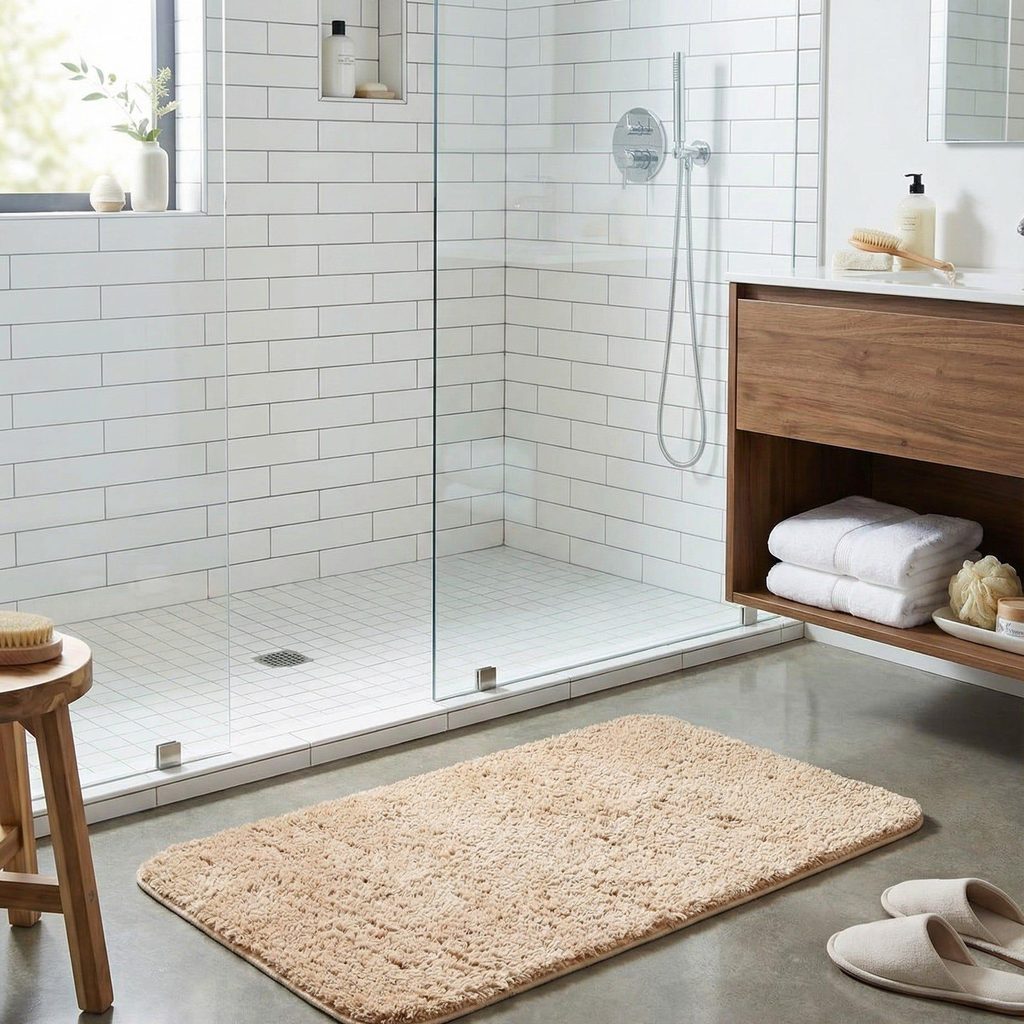
Small bathrooms benefit from thoughtful decorating choices. The goal is to introduce comfort and personality without making the room feel crowded.

Choose Light and Neutral Colors

Soft white, ivory, beige, pale gray, and muted blue can complement a compact bathroom and create a calm appearance.

Light colors work particularly well with white tiles, light wood cabinetry, and simple fixtures. If you prefer a little contrast, consider a subtle pattern or a rug with a darker border.

Use Small-Scale Patterns

Geometric lines, delicate stripes, understated abstract designs, and subtle textures can add character without overwhelming a small floor area.

For a minimalist bathroom, choose a simple pattern that complements the existing tiles and accessories.

Prioritize Easy-Care Materials

Smaller bathrooms can have limited ventilation, so selecting a rug that dries efficiently is important.

Look for materials suited to frequent moisture exposure and check the manufacturer’s washing instructions. Allow the rug to dry fully between uses whenever possible.

Styling tip: Pair a compact neutral bath mat with coordinated towels and a simple soap dispenser to create a cohesive look without adding unnecessary clutter.

Large Bathroom Rug Ideas

A spacious bathroom provides more opportunities to experiment with color, texture, and statement designs.

Anchor the Vanity With a Larger Rug

A larger rug or runner can visually connect the area in front of a double vanity. It can also introduce warmth and texture to a room dominated by hard surfaces.

Choose a rug that fits the vanity’s proportions while leaving enough room for cabinet doors and drawers to open freely.

Experiment With Bold Colors and Patterns

Larger bathrooms can accommodate more expressive designs, including vintage-inspired patterns, botanical prints, geometric shapes, and deeper colors.

Navy, forest green, terracotta, and muted burgundy can create contrast against lighter walls and cabinetry.

If your bathroom already contains patterned tiles or decorative wallpaper, choose a rug with a simpler design to keep the room visually balanced.

Create Separate Bathroom Zones

In a bathroom with a separate shower, bathtub, and vanity, coordinated rugs can help distinguish each area.

For example, place a bath mat near the shower and a matching runner along the vanity. Keep the colors and patterns related so the space feels connected rather than cluttered.

Bathroom Rug Ideas by Decorating Style
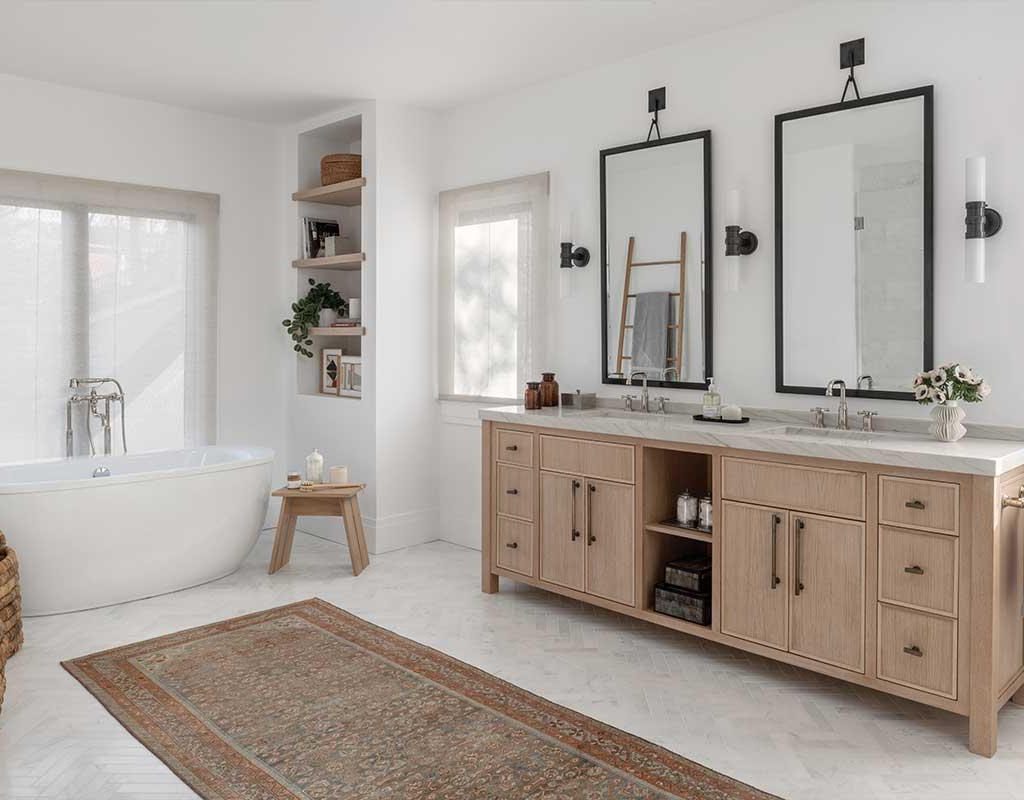
Your bathroom rug should complement the existing design of the room. Consider the following styles when choosing colors, patterns, and textures.

Modern and Minimalist Bathroom Rugs

Modern bathrooms often feature clean lines, simple fixtures, and uncluttered surfaces. A rug with a geometric pattern, subtle stripes, or a solid neutral color fits naturally into this setting.

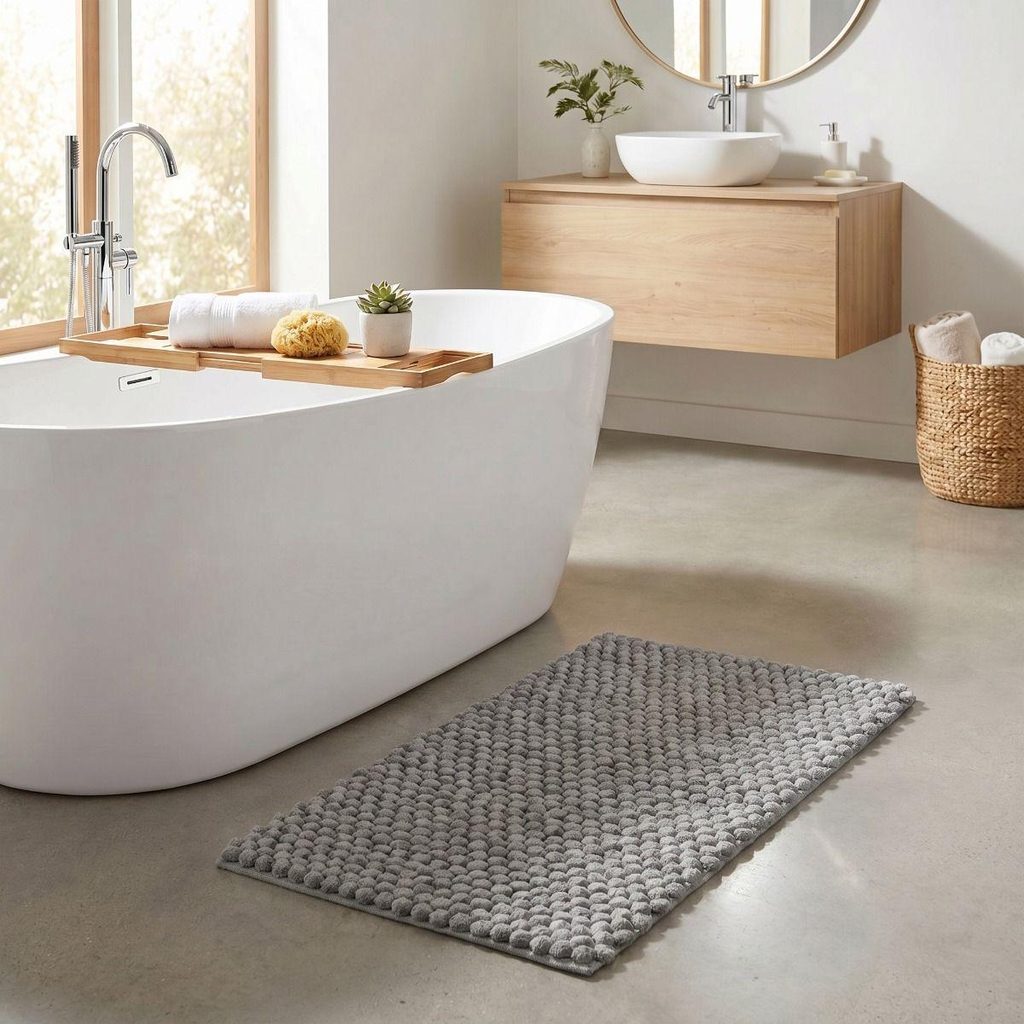
Popular choices include charcoal, warm gray, cream, black-and-white patterns, and understated beige.

Pair a simple rug with matte black fixtures, light wood cabinetry, or stone-effect tiles for a contemporary finish.

Traditional and Vintage-Inspired Bathroom Rugs

Traditional bathroom rugs bring warmth and decorative detail to a space. Persian-inspired motifs, vintage florals, ornamental borders, and faded patterns can create a timeless appearance.

Choose muted shades of blue, burgundy, green, cream, or brown to complement classic fixtures and traditional cabinetry.

For a transitional bathroom that combines modern and traditional elements, consider a vintage-inspired pattern in a contemporary color palette.

Coastal Bathroom Rug Ideas

Coastal-inspired bathrooms emphasize light, natural colors and a relaxed atmosphere.

Consider soft blue, seafoam green, sandy beige, and white rugs with subtle wave patterns, stripes, or organic designs.

These styles pair well with natural wood, woven storage baskets, white towels, and bright spaces with plenty of natural light.

Bohemian Bathroom Rugs

Bohemian-inspired rugs introduce texture, earthy colors, and expressive patterns.

Look for terracotta, sage green, warm beige, and muted rust tones. Geometric motifs, faded designs, and botanical patterns can add personality without requiring a complete bathroom makeover.

Combine these rugs with plants, natural materials, and coordinated accessories to create a relaxed, layered appearance.

Neutral and Classic Bathroom Rugs

Neutral rugs are versatile choices because they complement many decorating styles.

Ivory, warm white, beige, taupe, and soft gray work well with a wide range of tiles, cabinets, and fixtures.

For extra depth, consider a textured surface or a subtle tonal pattern instead of a completely plain design.

Neutral rugs are also easy to coordinate with seasonal towels and other accessories, allowing you to refresh the bathroom’s appearance without replacing everything.

Bathroom Runner Rug Ideas

Bathroom runners are long, narrow rugs that work particularly well in larger bathrooms and along extended vanity areas.

They can add visual continuity, provide a softer surface underfoot, and make an otherwise empty stretch of flooring feel more intentional.

Choosing a Runner for a Double Vanity

A runner measuring approximately 2.5 Ă— 7 feet may suit some double vanity layouts, while longer spaces may require a 2.5 Ă— 10-foot or 2.5 Ă— 12-foot runner.

Measure the available floor area rather than choosing a size based on the vanity alone. Make sure the runner does not interfere with drawers, cabinet doors, or walking paths.

Styling a Runner in a Primary Bathroom

Choose a runner that complements your bathroom’s overall palette. A neutral runner can balance patterned tiles, while a subtle geometric design can add interest to a plain floor.

If you also use a separate bath mat near the shower, select coordinating colors or patterns to create a unified look.

Low-profile rugs may be practical in areas with doors or drawers, but always check the rug’s thickness and the available clearance.

Washable Bathroom Rugs: Why Easy Cleaning Matters

Bathrooms experience frequent moisture, splashes, and everyday foot traffic. Choosing a rug that’s easy to clean can help simplify regular maintenance.

What to Look for in a Washable Bathroom Rug

Before purchasing, check whether the complete rug or only its cover is machine-washable.

Useful features to consider include:

  • Machine-washable construction: Makes regular cleaning more convenient when supported by the care instructions.
  • Absorbent materials: Help manage water around showers and sinks.
  • Quick-drying construction: Can be useful in bathrooms where moisture lingers.
  • Nonslip backing: Helps the rug stay in place on suitable flooring when correctly used.
  • Durable materials: Help the rug withstand repeated use and cleaning.

Avoid assuming that every washable rug is automatically waterproof, mold-resistant, or suitable for every washing machine. Check the manufacturer’s specifications.

How Often Should You Wash a Bathroom Rug?

Cleaning frequency depends on how often the bathroom is used, how much water reaches the rug, and how quickly it dries.

As a general starting point, inspect and clean your rug regularly, and wash it whenever it becomes visibly dirty, develops an odor, or remains damp for too long.

Follow the care label for water temperature, detergent, drying method, and any restrictions on washing the backing.

To keep the area fresh, hang or reposition the rug when needed so moisture can escape, and clean the floor underneath it regularly.

Personalized Bathroom Rug Ideas

Your bathroom can reflect your personality through carefully chosen colors, patterns, and accessories.

Consider monogrammed bath mats, subtle initial designs, coordinated rug sets, or colors that complement your towels and shower curtain.

For a family bathroom, prioritize easy-care materials and practical placement. For a guest bathroom, a coordinated rug and towel set can create a welcoming, finished appearance.

Keep personalization balanced with function: the rug should still fit the available space, dry appropriately, and remain secure underfoot.

How to Keep Bathroom Rugs Clean and Fresh

Regular care helps maintain the appearance and usability of your bathroom rug.

  • Shake out or vacuum the rug as appropriate for its material.
  • Wash it according to the manufacturer’s care instructions.
  • Allow it to dry fully before placing it back on the floor.
  • Clean the floor beneath the rug regularly.
  • Check the backing for wear, curling, or reduced grip.
  • Replace the rug if it becomes damaged or no longer stays securely in place.

Good ventilation can also help reduce lingering moisture in the bathroom.

If you use a rug on smooth tile, make sure the backing is suitable for that flooring. A rug pad or grip product should be compatible with both the rug and the floor surface.

Final Thoughts: Find the Perfect Bathroom Rug

The right bathroom rug combines style, comfort, and everyday practicality. From compact bath mats for small bathrooms to long runners for spacious vanities, there are options for nearly every layout and decorating preference.

Start by measuring your space and identifying your needs. Then choose a suitable size, a design that complements your bathroom, and materials that are easy to maintain.

Whether you prefer modern neutrals, traditional patterns, coastal colors, or bold statement designs, a thoughtfully chosen bathroom rug can help your space feel more comfortable and complete.

A beautiful bathroom starts with the details—and the right rug can make all the difference.
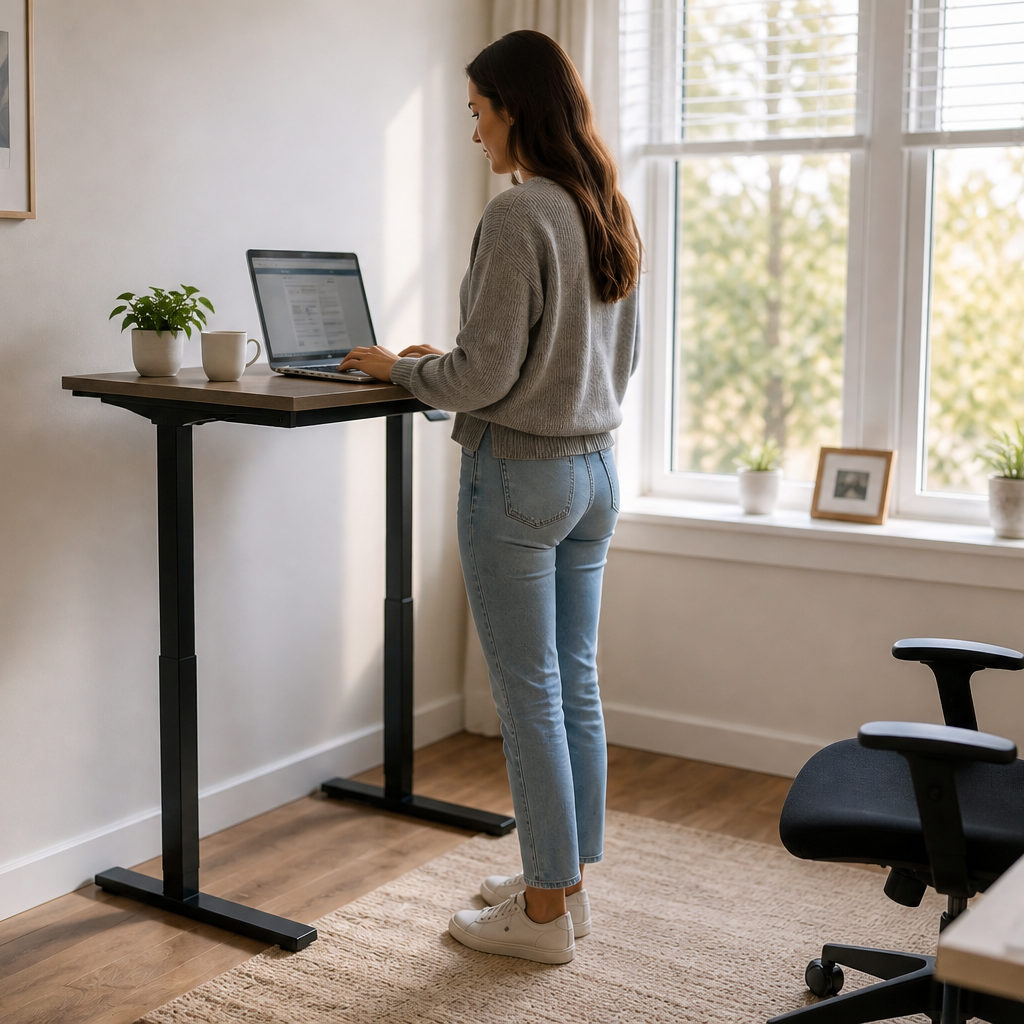
Small Standing Desks: A Complete Guide to Compact Workstations

Creating a comfortable and productive workspace can be challenging when you have limited room. Whether you work from a small home office, a studio apartment, or a dorm room, finding a desk that fits your space without compromising functionality is essential.

Small standing desks offer a practical solution for people who want a compact workstation and the flexibility to work while standing. Available in various sizes, designs, and adjustment styles, these desks make it easier to create a functional workspace in almost any environment.

In this guide, we’ll explain what small standing desks are, explore their key features and benefits, compare different types, and share practical tips for choosing the right desk for your needs.

Key Takeaways

  • Space-saving design: Small standing desks fit comfortably into compact home offices, bedrooms, apartments, and dorm rooms.
  • Flexible working positions: Adjustable models allow you to alternate between sitting and standing.
  • Ergonomic features: The right desk height and workstation setup can support comfortable posture.
  • Multiple styles: Choose from electric desks, manual adjustable desks, fixed-height desks, and standing desk converters.
  • Customizable options: Materials, finishes, storage solutions, and cable-management features help you create a workspace that suits your needs.
  • Better workspace organization: A well-planned compact desk can help keep essential work equipment accessible without overcrowding your room.

What Is a Small Standing Desk?

A small standing desk is a compact workstation designed to provide a comfortable work surface while taking up relatively little floor space. Depending on the model, it may feature a fixed standing height or an adjustable mechanism that allows you to raise and lower the desktop.

Unlike traditional large desks, compact standing desks are designed to make efficient use of limited space. They can accommodate essential equipment such as a laptop, monitor, keyboard, mouse, and a few everyday accessories.

Small standing desks are particularly useful for:

  • People working from home in limited spaces.
  • Students living in dorm rooms or shared accommodation.
  • Professionals who need a secondary workstation.
  • Laptop users who prefer a minimalist desk setup.
  • Anyone looking to create a more flexible home office.

When choosing a compact standing desk, consider the dimensions of your room, the equipment you use, and whether you need to alternate between sitting and standing.

Benefits of Small Standing Desks

A compact standing desk can improve the functionality of your workspace while helping you develop more flexible working habits.

1. Make the Most of Limited Space

One of the biggest advantages of a small standing desk is its space-efficient design. It can fit into corners, narrow rooms, and other areas where a full-size workstation may be impractical.

A smaller desktop also encourages you to prioritize essential equipment and keep your workspace organized.

For the best results, measure your available floor space before purchasing a desk. Remember to leave enough room for your chair, leg movement, cables, and access to nearby storage.

2. Alternate Between Sitting and Standing

Height-adjustable standing desks allow you to change working positions throughout the day. Alternating between sitting, standing, and walking breaks can help reduce prolonged sedentary time.

Standing alone is not a replacement for physical activity, but an adjustable desk can make it easier to incorporate movement into your routine.

If you work at a computer for several hours daily, consider choosing a model that adjusts to both your seated and standing working heights.

3. Support a Comfortable Workstation

A properly configured small standing desk can help you maintain a comfortable working posture.

Your elbows should remain close to your body, with your forearms approximately parallel to the floor while typing. Position your monitor at a comfortable viewing height and distance to reduce unnecessary neck movement.

Keep frequently used items within easy reach so you do not need to stretch repeatedly across the desk.

Remember that comfort depends on the entire workstation, including your monitor, keyboard, footwear, and working habits—not just the desk itself.

4. Create a More Organized Workspace

Many compact standing desks include practical features such as cable-management systems, drawers, shelves, and accessory hooks.

These features help keep your desktop clear and make better use of limited space.

If you use multiple devices, check whether the desk has enough room for your monitor, laptop, keyboard, mouse, and any other essential equipment before making a purchase.

Types of Small Standing Desks

Small standing desks are available in several styles. Understanding the differences can help you choose a model that suits your workspace, budget, and daily routine.

1. Electric Adjustable Standing Desks

Electric standing desks use a motorized mechanism to raise and lower the desktop at the touch of a button.

They are convenient for people who frequently switch between sitting and standing. Some models also include programmable height settings, allowing you to save preferred positions.

Best for: Home office workers who want convenient height adjustments and a flexible workstation.

What to consider: Price, motor noise, adjustment range, weight capacity, and the space required for the desk frame.

2. Manual or Hand-Crank Standing Desks

Manual standing desks use a hand crank or another mechanical adjustment system to change the desktop height.

They can offer height flexibility without requiring an electric motor, making them worth considering if you prefer a simpler design.

Best for: Budget-conscious users who want an adjustable desk and do not mind making height changes manually.

What to consider: Ease of adjustment, frame stability, and how frequently you expect to change positions.

3. Fixed-Height Standing Desks

Fixed-height standing desks have a stationary work surface designed for use while standing.

Their simpler construction may make them suitable for users who primarily work on their feet and do not need seated-height adjustments.

Best for: Dedicated standing workstations, occasional-use desks, or minimalist office setups.

What to consider: Ensure the desk height suits your body and working posture before purchasing.

4. Standing Desk Converters

A standing desk converter sits on top of an existing desk and provides a raised work surface for standing.

Some converters feature adjustable platforms for your monitor and keyboard, while others use a simpler lifting mechanism.

They can be an effective solution if you want to keep your current desk rather than replace it.

Best for: Small home offices, renters, students, and people who want to try a sit-stand setup without buying a complete standing desk.

Before choosing a converter, check its dimensions, weight capacity, adjustment range, and the amount of usable space remaining on your original desk.

Important Features to Look for in a Small Standing Desk

Not every compact desk offers the same functionality. Consider the following features when comparing options.

Desktop Size and Workspace

Measure the available area in your room and compare it with the desk’s width and depth.

Make sure the surface can accommodate your essential equipment without forcing you into an uncomfortable position. A laptop-only workstation may require less space than a setup with a large monitor, keyboard, and accessories.

Height Adjustability

If you plan to alternate between sitting and standing, check the desk’s minimum and maximum heights.

The adjustment range should suit your body height and allow you to work comfortably in both positions.

Weight Capacity and Stability

Check the manufacturer’s stated weight capacity and ensure the desk can safely support your equipment.

A stable frame is especially important when typing, using a monitor, or adjusting the desk height.

Storage and Cable Management

Drawers, shelves, cable trays, and integrated cable openings can make a compact workstation easier to organize.

However, avoid sacrificing too much usable desktop space for storage features you may not need.

Power Outlets and USB Ports

Some standing desks include integrated power outlets or USB charging ports. These can be convenient for charging compatible devices and reducing desktop clutter.

Check the product specifications to confirm which connections are included rather than assuming they are standard features.

Materials and Finishes

Small standing desks are available in a variety of materials and finishes, including laminate, engineered wood, solid wood, and metal frames.

Choose a finish that complements your room and suits your maintenance preferences. Also consider the durability of the desktop, the quality of the frame, and the manufacturer’s care instructions.

How to Choose the Right Small Standing Desk

The best compact standing desk is one that fits your space, accommodates your equipment, and supports your preferred working style.

Follow these steps before making your decision.

Step 1: Measure your available space. Record the maximum desk width and depth your room can accommodate. Allow additional space for movement and nearby furniture.

Step 2: List your essential equipment. Identify whether you need space for a laptop, one or more monitors, a keyboard, a mouse, and other accessories.

Step 3: Decide whether you need height adjustment. Choose an adjustable model if you want to alternate between sitting and standing. A fixed-height model may be sufficient for a dedicated standing workstation.

Step 4: Set a realistic budget. Compare the total cost with the features you actually need, including adjustment mechanisms, storage, and cable management.

Step 5: Check the specifications. Review the desk dimensions, height range, weight capacity, stability, assembly requirements, and warranty information.

Step 6: Plan your ergonomics. Ensure the desk can be set up with a comfortable monitor position and suitable keyboard height.

Tips for Setting Up a Small Standing Desk

A well-organized workstation can make a compact desk more comfortable and practical.

  • Keep essentials nearby: Place your keyboard, mouse, and frequently used accessories within easy reach.
  • Manage cables: Use cable clips or trays to prevent wires from becoming tangled.
  • Position your monitor comfortably: Keep the screen at a suitable height and distance for your needs.
  • Use vertical storage: Consider shelves or wall-mounted organizers if you need extra storage without taking up more floor space.
  • Alternate your working positions: If you use an adjustable desk, switch between sitting and standing and take regular movement breaks.
  • Avoid prolonged standing: Standing all day can cause discomfort. Aim for a balanced routine that includes sitting, standing, and walking.

Frequently Asked Questions

What size is considered a small standing desk?

There is no universal size definition. A small standing desk is generally designed to occupy less space than a standard full-size workstation. Compare the desk’s width and depth with your available room and equipment requirements.

Are small standing desks suitable for home offices?

Yes. Small standing desks can be useful in home offices, apartments, bedrooms, and shared spaces where floor area is limited. Choose a desk that accommodates your equipment and provides sufficient room to work comfortably.

Are electric standing desks better than manual models?

Electric desks offer convenient, button-operated adjustments, while manual models can provide height flexibility with a simpler mechanism. The better option depends on your budget, adjustment preferences, and how often you change working positions.

Can I use a standing desk converter instead of buying a new desk?

Yes. A standing desk converter can transform an existing desk into a sit-stand workstation. Check that it fits your current desk and provides sufficient space and height adjustment for your equipment.

Do small standing desks help improve posture?

A properly adjusted desk can support a comfortable working posture. However, posture also depends on monitor placement, keyboard position, chair setup, and how frequently you move throughout the day.

What should I look for in a compact standing desk?

Prioritize suitable dimensions, an appropriate height range, stability, weight capacity, and enough desktop space for your equipment. Additional features such as cable management and storage can improve convenience.

Final Thoughts

Small standing desks offer a practical way to create a functional workstation when space is limited. From electric adjustable models to manual desks and standing desk converters, there are options for different budgets, room sizes, and working preferences.

Before choosing a desk, consider your available space, essential equipment, adjustment requirements, and ergonomic needs. The right setup can help you organize your workspace and make it easier to alternate between sitting, standing, and moving throughout the day.

A productive workspace does not need to be large—it needs to work for you.

Standing vs. Sitting: Which Is Better for Heart Health?

Modern lifestyles often involve spending hours sitting at a desk, working on a computer, driving, or relaxing at home. Although sitting is a normal part of everyday life, spending too much time sitting with little movement may negatively affect your long-term health.

Research suggests that replacing some sedentary time with standing and light physical activity may support cardiovascular health, improve certain metabolic markers, and help with weight management. But is standing really better for your heart than sitting?

The answer depends on how long you remain sedentary, how much you move throughout the day, and your overall lifestyle. Standing can be a useful first step toward a more active routine, but walking and other forms of physical activity offer additional benefits.

In this guide, we explore the relationship between standing and heart health, the potential benefits of reducing prolonged sitting, and practical ways to build more movement into your daily routine.

Key Takeaways

  • Reducing prolonged sitting: Replacing some sitting time with standing or light movement may support better overall health.
  • Supporting cardiovascular health: Regular movement helps maintain a healthy lifestyle and can contribute to cardiovascular well-being.
  • Improving metabolic health: Breaking up sedentary periods with activity may help improve blood sugar regulation.
  • Managing body weight: Standing burns slightly more calories than sitting, although the difference is relatively small.
  • Creating healthier work habits: Alternating between sitting, standing, and walking can make your workday more active.
  • Building sustainable habits: Gradual changes are generally more comfortable and practical than standing for long periods all at once.

1. How Does Standing Affect Heart Health?

Your heart and blood vessels work continuously to deliver oxygen and nutrients throughout your body. Regular physical activity supports this system, while spending long periods sitting with minimal movement can contribute to a sedentary lifestyle.

Standing engages more muscles than sitting and typically requires slightly more energy. However, standing still is not equivalent to exercising. The greatest benefit comes from reducing uninterrupted sitting and incorporating regular movement into your day.

A 2015 study published in the European Heart Journal examined the relationship between sitting, standing, and cardiometabolic health. The researchers highlighted the need for further research to understand whether standing alone provides sufficient benefits when it replaces sitting.

A later study published in the European Heart Journal in 2023 also examined how different daily activities relate to cardiovascular and metabolic health markers. Its findings reinforced the importance of considering how sitting time is replaced, rather than assuming that every alternative activity offers the same benefits.

For a healthier work routine, consider alternating between sitting, standing, and walking instead of remaining in one position for hours.

2. Potential Health Benefits of Standing More Often

Standing more frequently can be one part of a healthier daily routine. The benefits depend on your activity levels, personal health, and how you incorporate movement into your day.

Supporting Blood Sugar Regulation

Prolonged sedentary periods may negatively affect how your body regulates blood sugar. Breaking up sitting time with standing and light movement can help reduce uninterrupted inactivity.

Walking for a few minutes after meals or taking short movement breaks during the workday can be particularly useful additions to your routine.

Helping With Weight Management

Standing generally burns more calories than sitting because your body uses additional energy to maintain an upright position.

However, the difference is modest. Standing alone is unlikely to produce substantial weight loss without other lifestyle changes. A balanced diet, regular walking, and consistent physical activity remain important for managing body weight.

According to research discussed by Harvard Health Publishing, replacing some sitting time with standing may contribute to small changes in daily energy expenditure.

Encouraging More Active Habits

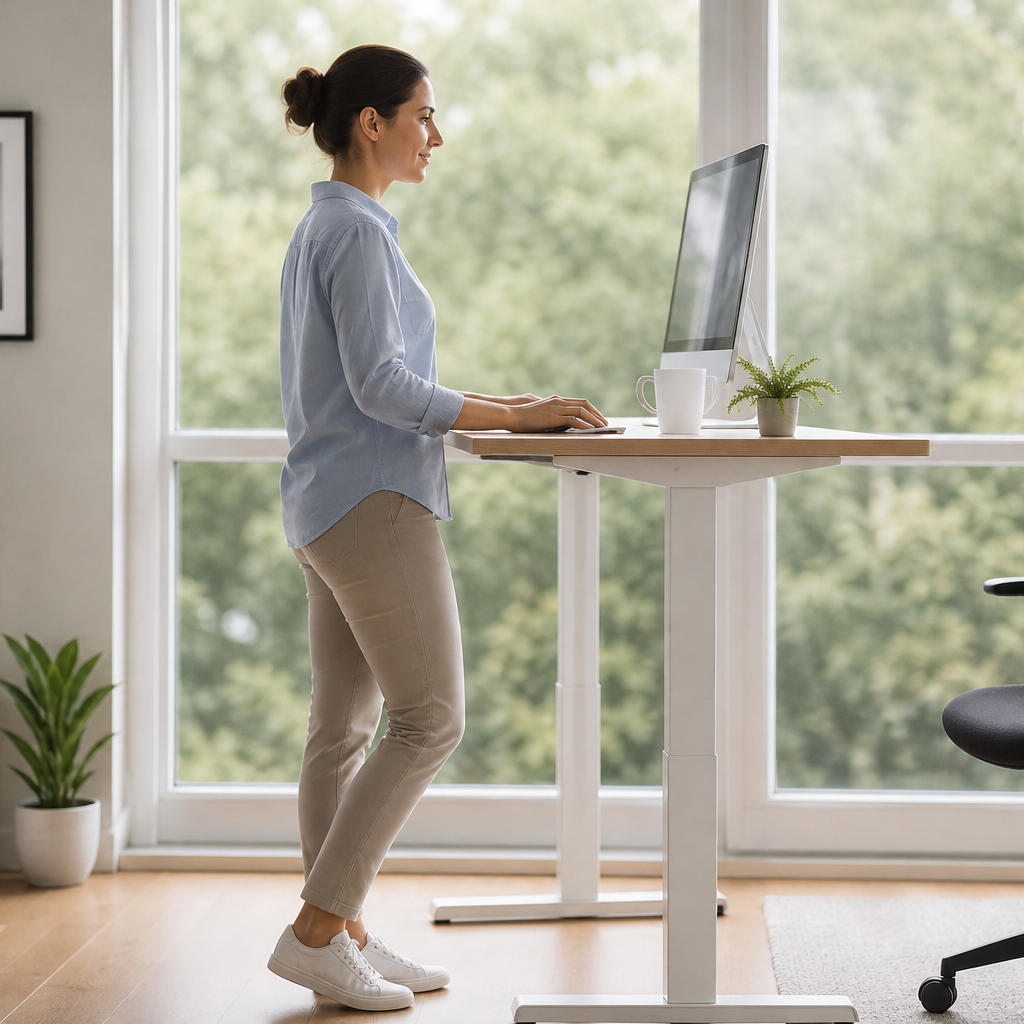
A standing desk can make it easier to change positions during the workday. For example, you might stand while reading documents, attending certain virtual meetings, or making phone calls.

These small changes can also serve as reminders to stretch, take walking breaks, and avoid remaining seated for extended periods.

3. Standing vs. Sitting: Understanding the Differences

Both sitting and standing have a place in a comfortable, productive workday. The main concern is spending too much time in one position without moving.

Sitting for Extended Periods

Sitting can be comfortable and appropriate for focused tasks. However, extended periods of inactivity may contribute to a sedentary lifestyle, particularly when combined with little exercise outside work.

Potential concerns associated with excessive sedentary time include:

  • Lower overall daily energy expenditure.
  • Less frequent muscle activity.
  • Poorer metabolic health when combined with other risk factors.
  • An increased risk of cardiovascular problems associated with prolonged sedentary behaviour.

These risks depend on several factors, including total activity levels, diet, sleep, and individual health.

Standing Throughout the Workday

Standing engages more muscles and uses slightly more energy than sitting. It may also make it easier to transition into other activities, such as stretching or walking.

However, standing for too long without changing position can cause foot discomfort, leg fatigue, and lower-back discomfort.

The goal is not to eliminate sitting entirely. Instead, aim for a balanced routine that includes sitting, standing, and regular movement.

4. Standing, Blood Circulation, and Cardiovascular Health

Blood circulation is essential for delivering oxygen and nutrients to your body’s tissues. Movement helps your muscles support the return of blood from the legs toward the heart.

When you sit for extended periods, your leg muscles may remain relatively inactive. Standing activates some of these muscles, but walking and ankle movements engage them more dynamically.

For this reason, alternating positions and taking short walking breaks can be more beneficial than simply standing still for hours.

If your work requires prolonged sitting, consider these practical habits:

  • Get up and move around regularly.
  • Take short walking breaks between tasks.
  • Perform gentle ankle movements while seated.
  • Avoid staying in the same position for unnecessarily long periods.
  • Adjust your desk and chair to maintain a comfortable working posture.

Important: Standing should not be considered a treatment for blood clots, circulation disorders, or heart disease. If you have persistent leg swelling, unexplained pain, or other concerning symptoms, seek medical advice.

5. Can a Standing Desk Help Improve Your Health?

A standing desk can make it easier to alternate between sitting and standing without interrupting your work.

For people who spend much of the day at a computer, an adjustable desk provides flexibility to change positions throughout the day. It can be especially useful when paired with reminders to stretch, walk, and take regular breaks.

Here are some practical advantages of using a standing desk:

  • Flexible working positions: Switch between sitting and standing when needed.
  • More opportunities to move: Use position changes as reminders to stretch or walk.
  • Improved workday awareness: Become more conscious of how long you remain sedentary.
  • Customizable ergonomics: Adjust desk height to support a comfortable posture.

A standing desk is not a substitute for exercise, and research does not establish that using one alone prevents heart disease. Its value lies in helping you develop more active and comfortable workplace habits.

6. How to Transition From Sitting to Standing

If you are accustomed to sitting for most of your workday, introduce standing gradually. There is no single standing schedule that is ideal for everyone.

Start With Short Intervals

Begin by standing for short periods during suitable tasks. Increase the duration gradually according to your comfort and tolerance.

Alternate Between Sitting and Standing

Avoid replacing an entire day of sitting with an entire day of standing. Change positions regularly and listen to your body.

Take Walking Breaks

Standing is useful, but walking provides additional movement. Take a short walk between tasks, during breaks, or after meals whenever practical.

Adjust Your Desk Correctly

Position your desk so that your shoulders remain relaxed, your elbows are approximately at a right angle, and your wrists stay in a comfortable, neutral position while typing.

Keep your screen at a comfortable viewing height to reduce unnecessary neck strain.

Wear Comfortable Footwear

Supportive shoes and a comfortable floor surface can help reduce fatigue when standing. If you experience persistent discomfort, reduce your standing time and reassess your workstation setup.

7. Simple Ways to Move More During Your Workday

You do not need to stand constantly or purchase special equipment to become more active. Small, consistent changes can help reduce uninterrupted sitting.

Try incorporating these habits into your daily schedule:

  • Stand during selected phone calls.
  • Walk to speak with a colleague when practical.
  • Take brief movement breaks between work sessions.
  • Stretch gently during breaks.
  • Walk for a few minutes after lunch.
  • Use an adjustable standing desk if it suits your workspace and budget.
  • Set reminders to change positions throughout the day.

Choose habits that fit your schedule so that you can maintain them over time.

Frequently Asked Questions

Is standing better for your heart than sitting?

Replacing some prolonged sitting with standing may support certain aspects of metabolic and cardiovascular health. However, standing alone is not a replacement for walking, exercise, or other heart-healthy habits.

Does standing burn more calories than sitting?

Yes. Standing generally uses slightly more energy than sitting, but the difference is modest. It should not be relied on as a primary weight-loss strategy.

Can a standing desk prevent heart disease?

There is not enough evidence to conclude that using a standing desk alone prevents heart disease. It may help reduce sedentary time, especially when combined with regular movement and a healthy lifestyle.

How often should I stand during the workday?

There is no universal schedule for everyone. A practical approach is to change positions regularly, take short movement breaks, and gradually develop a routine that feels comfortable.

Is standing all day healthier than sitting?

No. Prolonged standing can cause discomfort and fatigue. Alternating between sitting, standing, and walking is generally a more balanced approach.

Is walking better than standing for heart health?

Walking generally provides more physical activity than standing still because it involves more muscle movement and increases energy expenditure. Both can help you reduce sedentary time, but walking offers additional exercise benefits.

Final Thoughts: Build a More Active Workday

Standing can be a simple way to reduce prolonged sitting, but the best approach to heart health involves more than changing your posture.

By alternating between sitting and standing, taking regular walking breaks, maintaining a comfortable workstation, and incorporating physical activity into your routine, you can build healthier habits that fit your everyday life.

Whether you work from home or in an office, start with small changes and make them consistent. Over time, these habits can help create a more active, comfortable, and health-conscious working environment.

Make movement part of your workday—not just an occasional break.

Streamline Your Workspace: The Ultimate Guide to Effortless Organization

A cluttered desk leads to a cluttered mind. Whether you are running a busy corporate office, managing a classroom, or just trying to keep track of household bills, paperwork has a habit of piling up quickly.

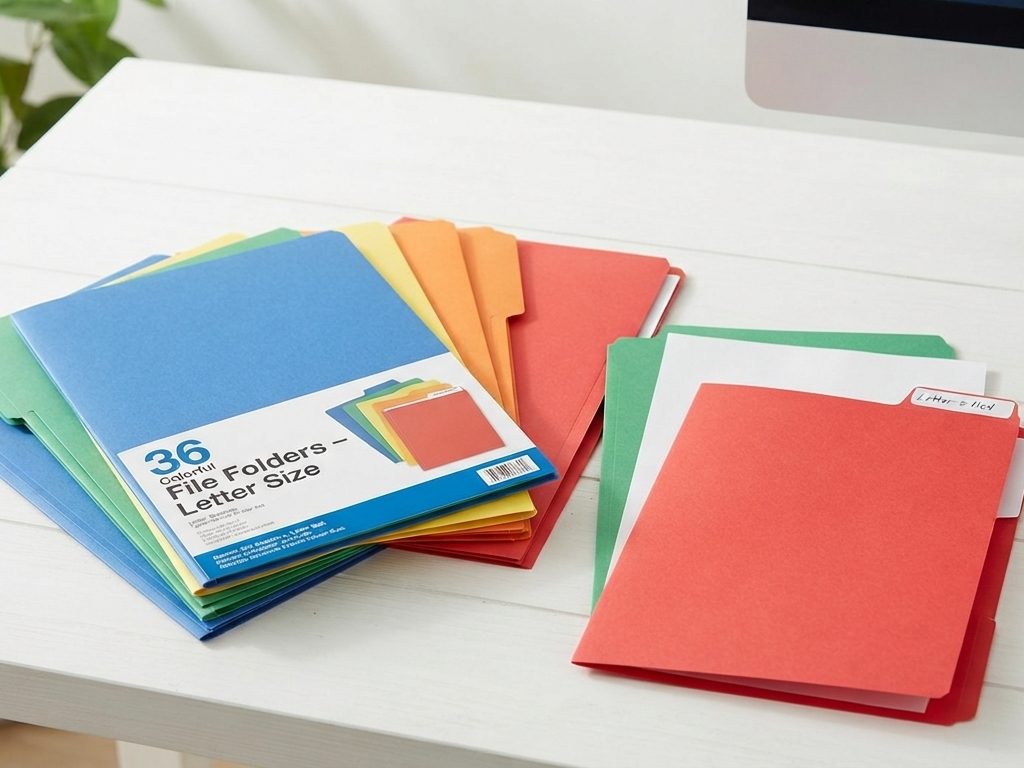
If you are tired of wasting precious minutes hunting for missing documents, it is time for an upgrade. Meet the ultimate solution for your desktop chaos: our Colorful File Folders (36-Pack, Letter Size).


Why Color-Coded Filing Changes Everything

Most people treat filing as a chore because standard beige folders look uninspiring and blend together. Transitioning to a vibrant, color-coded system drastically cuts down on retrieval time. By assigning specific colors to different categories—such as green for financial documents, blue for client projects, and red for urgent tasks—your brain instantly recognizes where things belong.


Key Features At A Glance

  • 36-Pack Value: One box provides plenty of folders to sort multiple projects, school subjects, or tax years.
  • Perfect Letter Size: Tailored to hold standard 8.5 Ă— 11-inch documents securely without any awkward folding or crumpled edges.
  • Easy-View 1/3-Cut Tabs: Staggered tab positions (left, center, and right) allow you to read your custom labels easily at a glance.
  • Durable Construction: Crafted with sturdy 11-point bright green covers to handle constant everyday handling.
  • Lighter Interior: A bright interior prevents documents from getting lost at the bottom of the folder and simplifies sorting.
  • Eco-Friendly Choice: Made with 10% recycled fiber (including 10% post-consumer fiber) so you can organize responsibly.
  • 1-Year Limited Warranty: Backed by a 1-year limited warranty so you can purchase with absolute confidence.

Versatile Organization for Every Setting

These folders are built to adapt to your specific workflow. Here are just a few ways you can implement them today:

  • In the Office: Separate monthly invoices, client accounts, meeting notes, and human resources paperwork.
  • In the Classroom: Keep lesson plans, student worksheets, report cards, and permission slips perfectly categorized.
  • At Home: Finally conquer the kitchen counter clutter by neatly filing utility bills, medical records, insurance policies, and appliance manuals.

The multiple tab positions give you the freedom to build a custom system that mirrors the way you naturally think and work.


Get Organized Today!

Don’t let paperwork hold your productivity back. Invest in a system that makes sorting simple, fast, and visually appealing.

đŸ‘‰ [Click Here to Shop the 36-Pack Colorful File Folders Now and Take Control of Your Workspace!]